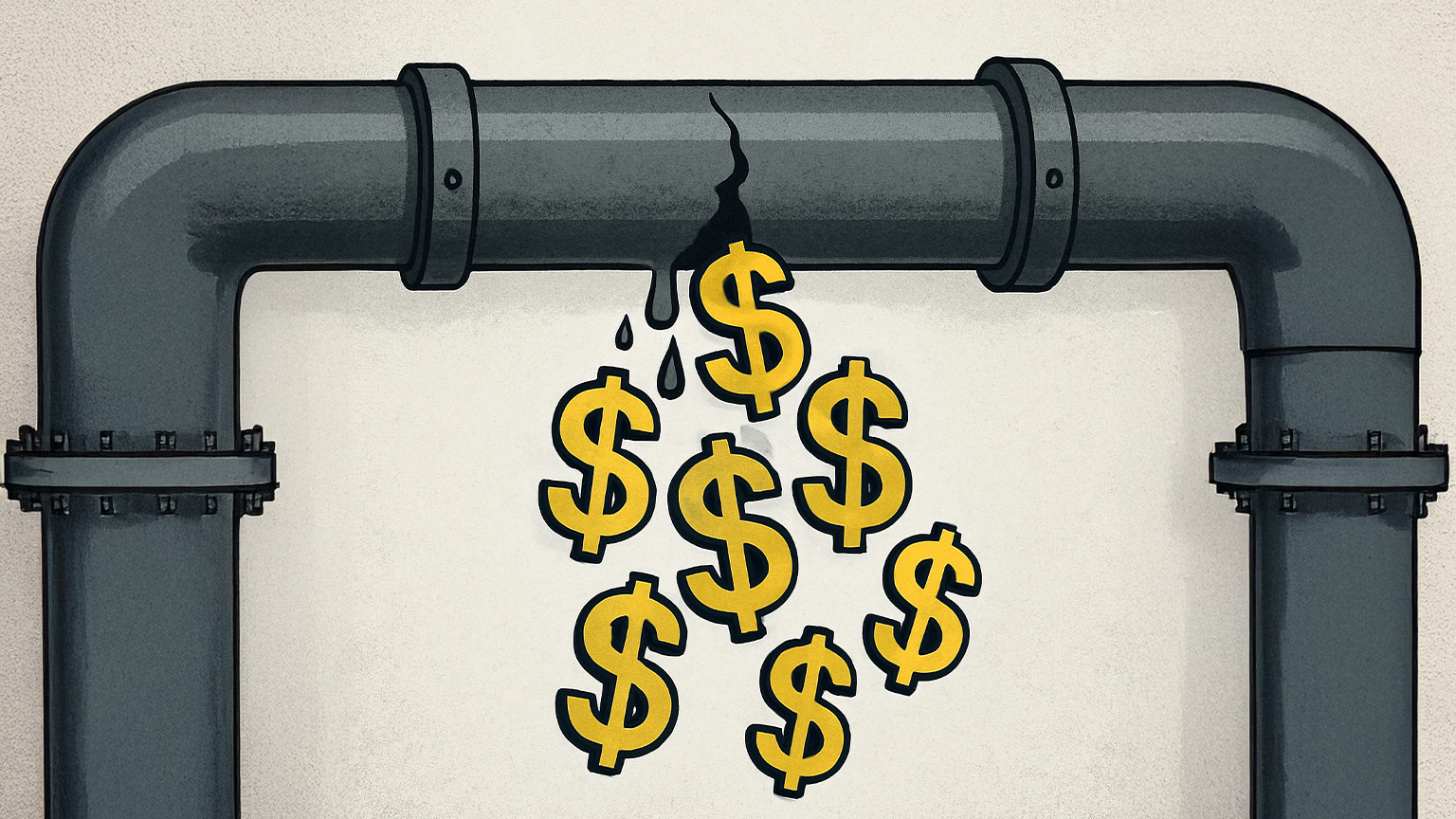
 Marketers devote enormous energy to generating demand. We refine audiences, creative, bids, placements, and budgets to earn a click from the right customer at the right moment. Yet when that customer responds, a surprisingly common thing happens: they are sent to a generic page, asked to navigate an unclear experience, or left without a meaningful follow-up if they are not ready to convert immediately.
When performance stalls, the reflex is often to put more money into media. But more traffic cannot solve a journey that is leaking value. It only sends more people into the same friction.
That is not simply a media problem. It is a demand conversion problem.
Demand Conversion is the discipline of improving everything that happens after paid media creates interest. It begins with the landing experience - the message, page, offer, form, and path to action - and continues through the email and lifecycle programs that turn early interest into a first conversion, and a first conversion into a longer customer relationship.
Paid media creates demand. Demand Conversion determines how much of that demand becomes revenue.
The Missing Half of the Funnel
The ad click is frequently treated as a finish line. In reality, it is a handoff.
That handoff often exposes a structural gap. The media team owns the campaign, the web team owns the site, and the CRM or email team owns follow-up. The customer, however, experiences one journey.
If the promise in the ad is not immediately reinforced on the page, confidence drops. If the page is slow, confusing, or overloaded, intent disappears. If the form asks for too much, the customer abandons it. If a lead or shopper is not ready today and no relevant follow-up arrives tomorrow, the business pays to create demand that someone else may eventually capture.
Demand Conversion closes that gap by treating the post-click journey as a connected revenue system. It brings two disciplines together: Conversion Rate Optimization, which helps more visitors act now, and email nurturing, which gives the business additional opportunities to convert and retain them over time.
Convert the Click With CRO
Conversion Rate Optimization is sometimes mistaken for a collection of design tweaks: change a button color, shorten a headline, or move a form. Those changes may be worth testing, but CRO is not guesswork and it is not a one-time redesign. It is a research-led process for identifying friction, developing a hypothesis, testing a meaningful change, and applying what the customer response reveals.
The work starts with behavior. Funnel data shows where people leave. Heatmaps and session recordings show where they hesitate or encounter usability problems. On-page surveys reveal the questions the page failed to answer. Together, these inputs create a prioritized backlog rather than a collection of opinions.
The answer may be a focused A/B test, a multivariate test on a high-traffic experience, or a new page built and tested against the existing control.
The business impact can be significant because every improvement applies to traffic the brand is already paying for. In one Max Connect Digital engagement, a landing page built specifically for paid search traffic increased the conversion rate from 1.33% on the existing request-a-quote page to 3.89% - a 193.76% lift. In another ecommerce test, adding clear direction and a call to action above the fold increased revenue per session by $6.42.
Neither result required buying another click. The value came from converting more of the demand that already existed.
Convert Again and Again With Email Nurturing
Even an excellent landing page will not convert every qualified visitor during the first session. Some need more information, some are comparing options, and others convert once but receive no compelling reason to return.
This is where email and lifecycle marketing extend the value of acquisition.
Effective nurturing is more than a monthly newsletter or a calendar of promotions. It is a system built around customer behavior. Welcome sequences establish value. Browse and cart-abandonment flows restore momentum. Post-purchase communication introduces the next relevant action. Win-back programs create new value from relationships the business has already paid to acquire.
Segmentation makes those programs more useful. When messaging, offers, and timing reflect different needs and levels of intent, email becomes a revenue channel rather than a broadcast tool.
The opportunity is not limited to ecommerce. For one home-services brand, Max Connect launched an automated nurture series for inactive leads. The program generated 126 booked meetings from prospects who might otherwise have gone untouched. At an average installation value of $4,000, those meetings represented as much as $504,000 in potential pipeline. Using a modeled close rate of 10% to 20%, the program created an estimated $50,000 to $101,000 in revenue opportunity from a $7,000 investment.
The lesson is simple: a cold lead is not necessarily lost demand. Often, it is demand waiting for a better next step.
The Multiplier Effect
CRO and lifecycle marketing are often budgeted as separate line items. Strategically, they should be viewed as multipliers of the demand-generation investment.
CRO improves the percentage of paid visitors who become leads or customers, lowering acquisition cost without requiring a proportional increase in media. Email nurturing increases the value of those acquired relationships through additional conversions, repeat purchases, reactivation, and retention. One improves the efficiency of the first conversion; the other expands the number and value of conversions that can follow.
The effect compounds. A clearer landing experience produces more first-party relationships, and a stronger lifecycle program makes them more valuable. Email insights can inform landing pages, ad creative, and audience strategy, while on-page research can improve nurture content. Each part of the system makes the others smarter.
It also helps the brand build an audience it owns. Paid media will remain essential, but a healthy customer database reduces the need to rent every interaction again. Over time, that owned audience becomes a durable source of revenue and insight.
Build a Program, Not a Project
Demand Conversion works best as an operating rhythm rather than a one-time sprint. Customer expectations, offers, traffic sources, and audiences change. A page that performs well today can become a constraint tomorrow.
A practical program begins with the highest-value path: the campaign receiving the most spend, the page handling the most qualified traffic, or the lifecycle gap closest to revenue. The team audits the funnel, priority pages, database, and existing automations, then identifies quick wins and larger test opportunities.
From there, the organization launches the highest-priority improvements: a dedicated landing page, a foundational nurture flow, controlled experiments, or better segmentation. The work then becomes a steady cadence of testing, learning, and reinvestment, with resources moving toward the highest-impact opportunity each month.
The right measurement framework matters. Conversion rate, revenue per session, cost per lead, and cost per acquisition show whether the immediate journey is improving. Revenue by campaign, flow, and segment - along with reactivation and customer lifetime value - shows whether the relationship is becoming more valuable. Opens and clicks are useful diagnostics; revenue and customer value are the outcomes.
Before You Buy More Traffic
There will always be pressure to scale the top of the funnel. Sometimes that is the right answer. But before committing the next dollar to more traffic, marketers should ask a more valuable question: How much of the demand we already generate are we failing to convert?
The answer is rarely found in a single channel or one dramatic redesign. It is found in the cumulative effect of clearer pages, stronger offers, less friction, smarter follow-up, better segmentation, and disciplined experimentation.
Demand generation earns attention. Demand Conversion turns that attention into action, revenue, and relationships that become more valuable over time. Brands that manage both sides of that equation will not simply acquire more customers. They will get more growth from every customer journey they have already paid to begin.