 This article was originally published by Mark Mensheha – Director of The Business Journals on bizjournals.com. To read the original article, click here.
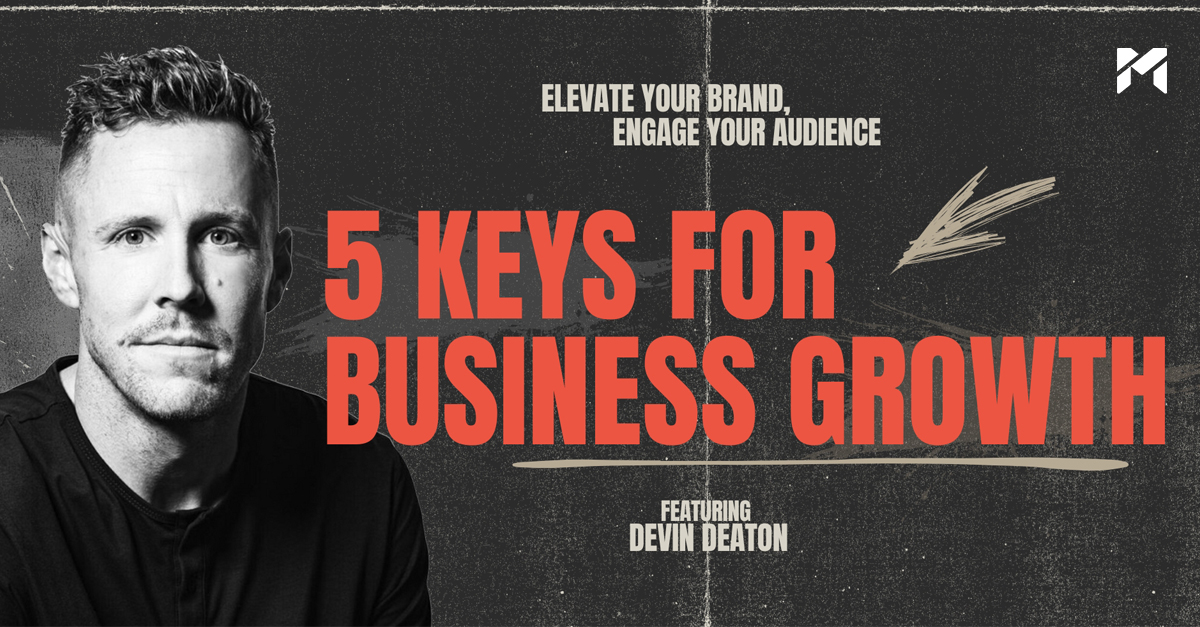
Small-business expansion comes with a cautionary note for many company founders. Amid all the entrepreneurial success stories that are celebrated, there also exist examples of small businesses that have grown too quickly, leaving owners to make decisions they wouldn’t have anticipated when thinking about growth. I spoke about growth strategies with Devin Deaton, founder and partner of Max Connect Digital, an agency that has helped a number of clients grow. In so doing, the Utah-based company has grown in its own right since its start in 2013. The company, which has more than 60 employees, opened an office in Arizona at the start of the year. It's posted 25% to 30% annual revenue growth in recent years, Deaton said, with the company poised to post $50 million in revenue this year. Here are five tips Deaton has for founders when it comes to business growth — making sure that it’s growth that's sustainable.
1. Define your non-negotiables early
This means identifying the core values, processes and standards that must remain in tact even as you pursue expansion, Deaton said. For many companies, these non-negotiable are codified in a mission statement. There’s a difference between stating your values and executing them, though. “A lot of people sit down when they start their business and they develop their mission statement first, and sometimes I feel like that's a mistake,” Deaton said. “You don't really know what's in your business. You don't really know the culture you've developed.” Deaton said a mission statement needs to develop organically, and it needs to reflect a company’s beliefs. In the case of Max Connect, it’s a pursuit of “world domination,” Deaton said. “That's what we talk about: We want to dominate the world. But it kind of just came out of the culture of the four partners that started it,” he said. “[If] it was a meeting, we wanted to dominate it. If it was a campaign for a client, we wanted to dominate it. If it was going to do research, we wanted to dominate. So we kind of jokingly created a company motto, a mission statement of ‘world domination.’”
2. Teach people what makes the company unique
Every company has a set of norms for employee behaviors, rituals and decision making processes. Those characteristics are the things that will stand out when it comes times for employees to scale with new teams and in new markets. Companies that do that well will be able to work together better, Deaton said.
3. Hire for values first, skills second
Business is done by people, not companies. Hiring people who embody a certain culture will prevent any sense of dilution as the company expands, Deaton said. He added that a company's core values can be relatively easy to maintain when you have a small group of employees in one office location. It can be tougher for a company to set and reinforce those principles if it has more employees working in multiple locations if those ideals aren't part of a company's foundational identity. Deaton said Max Connect has four core values that it keeps in mind when looking to bring on new employees: team above self; relationships matter; embrace the struggle; and, prove the impossible.
When hiring, Deaton said he wants to get a sense of a person’s values relative to those points to see if the prospective employee would fit well with the company. You can change what someone knows, he said, but you can’t change who a person is. Hiring is also the time to find out what kind of workplace environment a prospective employee likes. “It's kind of like 'sink or swim,'” he said. “The right type of people will swim, and when you get the right type of people all swimming together, you can fly. That's why we try to make sure we have the right type of people, and we can teach them everything they need to know after that.”
4. Expand in measured waves
A company should look to enter new markets gradually, focusing on mastering one at a time to ensure quality and cultural alignment, Deaton said. Coming immediately out of the pandemic, companies were pushing hard to expand and grow revenue, he said. Now, he sees companies being more intentional about their growth. That ties to a thought of having sustainable growth, with employers wanting to expand in measured ways so they can continued to grow over a period of time. It’s OK for a company to evolve as it grows — just as a company might adjust its annual goals midyear based on how the first six months of a year play out, Deaton said. An owner, and a company's employees, always should be able to lean back on its established core values, though.
5. Find opportunities to underscore company culture and values
Celebrating great ideas and looking for moments that typify what you stand for is important, Deaton said. When people are passionate about the work they're doing, you want to recognize and acknowledge that. “We want people who, when they come up to a challenge, they don't quit. They find a way over it. They find solutions,” he said.